






What an outdoor statue is up against
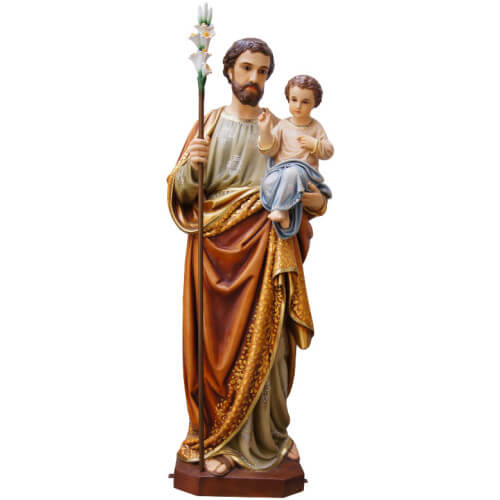
A statue in a Florida garden lives through a summer of afternoon downpours and a sun that bleaches fence boards in two seasons. Farther north it faces freezing nights and months under snow. Our resin-fiberglass statues are made for this. The resin-fiberglass blend does not absorb water the way concrete or plaster does, so it will not spall or crumble in a freeze, and it is light enough to move when the weather turns. What needs looking after is the painted surface, and that is mostly a matter of keeping it clean and keeping harsh things away from it.
What the sealed finish does
Every statue we sell for exterior placement leaves the workshop hand-painted and then sealed with a clear protective coat over the paint. The sealer does three things. It keeps water from working under the paint at the edges and seams, it slows the fading that ultraviolet light causes in any pigment left in the open, and it gives the surface a smooth skin that dust and pollen rinse off rather than cling to. It is not armor. It will not stop a lawn mower, and it will not keep gold detail bright through a summer of direct sun, which is why the Fancy finish is an indoor finish and Standard and Monotone are the ones for a garden, a grotto, or a plaza.
Over years the sealer itself slowly weathers. A statue in full sun shows it first as a softening of the deepest colors, a blue mantle turning a shade lighter. That is normal and gradual, and a statue under an eave, a tree canopy, or in a north-facing grotto keeps its color longer than one in an open bed facing south.
Cleaning: what to use
Twice a year is enough for most gardens; monthly near the coast or under trees that drop sap. The method is the same as washing a car by hand.
- Hose the statue down with plain water before touching it, so grit is not rubbed into the finish.
- Wash with a bucket of warm water and a few drops of mild dish soap, using a soft cloth or a soft sponge. Work from the top down.
- Use a soft toothbrush or a paintbrush for the folds of a mantle, the base of the neck, and the crevices around hands and feet, where mildew gathers first.
- Rinse thoroughly with the hose and let the statue air-dry. Do not leave soap to dry on the surface; it leaves a film that attracts dirt.
Green or black spotting in a shaded spot is mildew. One part white vinegar to four parts water on a cloth will lift it; let it sit a minute, scrub gently, rinse well. Soak bird droppings with a wet cloth and wipe rather than scrape; dried droppings are abrasive and acidic.
What not to use
- No pressure washer, at any setting. It will lift paint at the edges and drive water into the base.
- No bleach, ammonia, or household cleaners with either in them. They cloud the sealer and yellow whites.
- No abrasive pads, scouring powder, magic-eraser sponges, or steel wool.
- No solvents: no acetone, paint thinner, or citrus degreaser.
- No car wax or furniture polish; some contain solvents, and all attract dust once they haze.
- No hardware-store spray sealers over the finish. If a statue ever needs resealing, call us first at (828) 777-4517.
Winter
Resin-fiberglass survives freezing; standing water does not survive it gracefully. The two places water collects are the top of a level base and any hollow inside the base. Before the first hard frost, tip the statue and drain it, then make sure it sits on a surface that sheds water rather than in a saucer that holds it. A statue under 36 inches is easiest to bring into a garage or a shed for the winter, upright and covered with a sheet, not plastic, which traps condensation. A larger statue can stay out. Brush snow off rather than letting it refreeze on the shoulders, and do not chip ice from the surface. Never leave a statue lying on the ground over the winter; the ground stays wet against the paint for months.
Coastal air
Salt haze settles on every surface within a few miles of the ocean, and where salt sits, moisture follows. The care is simple: rinse with fresh water from the hose more often, monthly in a coastal yard, weekly on a balcony that faces the water. A statue under a porch roof needs more rinsing, not less, because rain is what would have washed the salt off. Salt does not harm the resin-fiberglass; it dulls the sealer if left to build up.
When a Fancy finish belongs indoors
Our Fancy finish is full-color painting with gold detail on the trim of a mantle, the rays behind Our Lady of Guadalupe, a crown, the border of a tunic. The gold is the reason it is an indoor finish. Sun and rain dull it in a way the rest of the paint does not suffer, and dulled gold cannot be cleaned back. A Fancy statue can stand in a covered entry or a screened lanai that never takes rain or direct afternoon sun. If you want gold detail on a statue that will be outside, tell us where it is going; a Standard finish in a covered spot often serves better than a Fancy one that must come in every time a storm is forecast.
Anchoring a base
Wind is the main danger to a garden statue, and the taller and lighter the figure, the more it matters. The goal is a statue that cannot tip and cannot walk.
- Set the statue on a level, hard surface: a concrete pad, a paver, a stone or concrete pedestal. Never on soil or mulch, which shift with rain and hold water against the base.
- Make sure the pedestal top is larger than the statue's base on every side, and check it with a level first.
- For a statue under about 36 inches, a bead of clear exterior silicone under the base keeps it from sliding, and can be cut free with a blade if you ever move it.
- For a larger statue, or any statue in an exposed spot, ask us about the base before ordering. We will tell you what a given statue allows rather than have you drill into one blind.
- If the base is hollow, clean dry sand adds ballast without trapping water the way gravel and soil can. Cap the opening so the sand stays dry.
- In hurricane country, bring anything under 48 inches indoors when a storm is named. An anchored larger statue will ride out wind; it is the flying debris you cannot protect it from.
If something does go wrong
A chip from a fallen branch or a mower stone is a repair, not a loss. Keep the broken piece if you can find it, keep the surface dry, and send us a photograph. A statue that arrives damaged in transit is replaced, so open the crate and check it the day it arrives.
Choosing one
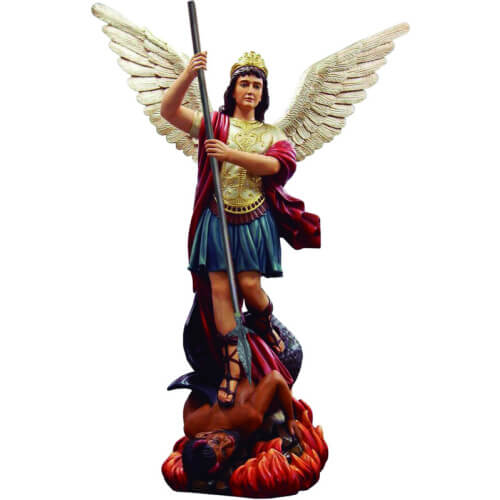
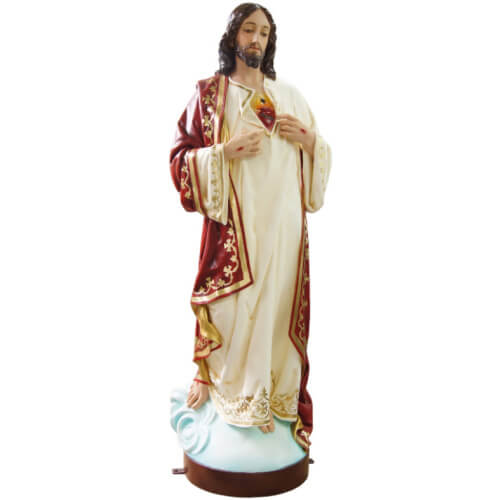
For a garden, order the Standard full-color or Monotone finish sealed for exterior placement. The 31-inch St. Francis is the size most people put beside a walk or a birdbath, and easy to bring in for the winter. The 44-inch Our Lady of Lourdes is a grotto size, and a grotto is the kindest place to keep a painted statue. The 48-inch Sacred Heart of Jesus anchors a yard corner or a school courtyard on a pedestal, and the 59-inch Our Lady of Guadalupe is the plaza and church-entrance size that should be anchored from the day it is set.


